
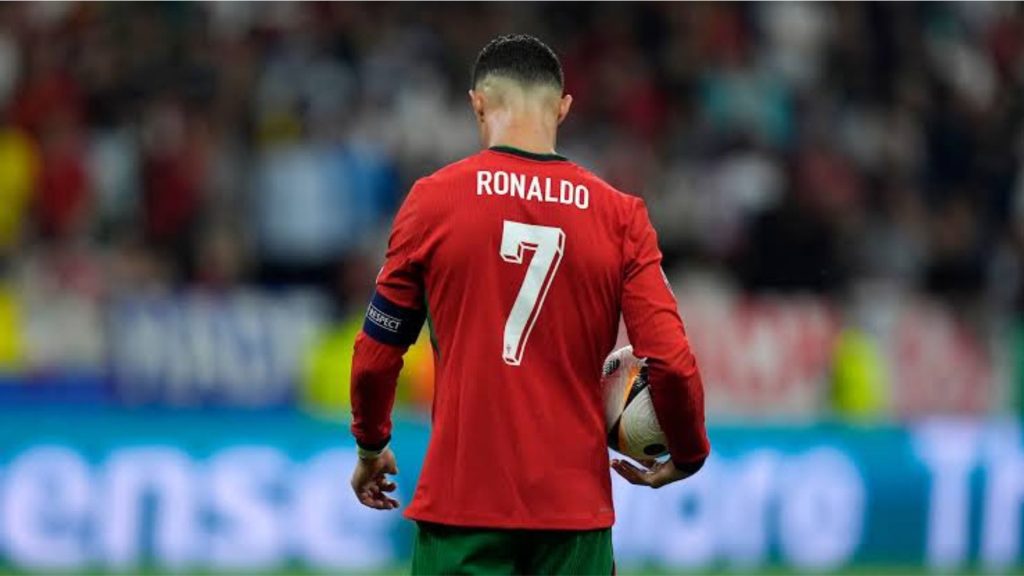
When Cristiano Ronaldo first stepped onto the pitch for Portugal as an 18-year-old substitute against Kazakhstan in August 2003, few could have fully anticipated the seismic transformation awaiting Portuguese football. Fast-forward 23 years, 234 caps, and 146 goals later, the 5-time Ballon d’Or winner has officially closed the curtain on his international career—leaving behind a record book that may take generations to rewrite.
While his final international chapter closed following a September fixture against Wales and amid recent internal transitions, the statistical legacy Ronaldo leaves behind cements him as the most prolific international goalscorer in the history of men’s football.
The Numbers Behind the Legend
To understand Ronaldo’s impact on the global stage, one must look closely at the staggering metrics accumulated across his 23-year tenure with *A Seleção*:
- 234 Appearances: The all-time record holder for the most international caps in men’s football history, surpassing Kuwait’s Bader Al-Mutawa.
- 146 International Goals: A record scoreline that places him firmly ahead of Ali Daei (109) and Lionel Messi on the all-time international scoring charts.
- Multi-Tournament Precision: The first player in history to score at five separate FIFA World Cup finals – 2006, 2010, 2014, 2018, 2022 and six UEFA European Championships.
- 10 International Hat-Tricks: This is the highest number of hat-tricks recorded by any player in men’s international football history.
- Lifting the silverware: Changing Portugal’s Footballing Destiny
Before Ronaldo’s emergence, Portugal was widely viewed as a nation of immense talent that repeatedly fell short on the biggest stages—most notably finishing as runners-up on home soil at Euro 2004.
Ronaldo completely altered that narrative:
- UEFA Euro 2016 (France): Serving as team captain, Ronaldo rallied Portugal to their first-ever major international trophy. Despite suffering an injury early in the final against France, his leadership from the touchline helped inspire Eder’s extra-time winner in Paris.
UEFA Nations League Dominance: He led Portugal to victory in the inaugural 2019 UEFA Nations League tournament—highlighted by a memorable hat-trick against Switzerland in the semi-finals—and subsequently guided them to a second Nations League crown.
Lifting the silverware: Changing Portugal’s Footballing Destiny
Before Ronaldo’s emergence, Portugal was widely viewed as a nation of immense talent that repeatedly fell short on the biggest stages—most notably finishing as runners-up on home soil at Euro 2004.
Ronaldo completely altered that narrative:
- UEFA Euro 2016 (France): Serving as team captain, Ronaldo rallied Portugal to their first-ever major international trophy. Despite suffering an injury early in the final against France, his leadership from the touchline helped inspire Eder’s extra-time winner in Paris.
- UEFA Nations League Dominance: He led Portugal to victory in the inaugural 2019 UEFA Nations League tournament—highlighted by a memorable hat-trick against Switzerland in the semi-finals—and subsequently guided them to a second Nations League crown.
What Lies Ahead: The Quest for 1,000 Career Goals
While the red and green jersey of Portugal is officially laid to rest, Ronaldo’s overall journey on the pitch is far from finished.
At club level with Al Nassr in the Saudi Pro League, Ronaldo remains focused on reaching an unprecedented career milestone: **1,000 official career goals**. Free from the physical demands and travel schedule of international breaks, the 41-year-old icon can direct his full energy toward this final personal target.
The Portuguese Football Federation has confirmed plans to host a formal tribute honoring Ronaldo’s contributions. As international football adjusts to a new era without its leading all-time marksman, the record 146 goals he leaves behind stands as a testament to unmatched longevity, dedication, and elite performance.
Beyond the Numbers: Ronaldo’s Historic Milestones and Records Left Behind with Portugal
Ronaldo’s Historic Milestones and Records with Portugal